Barbara
Renewable resources regenerate naturally within human timescales and can be used indefinitely without depletion, while nonrenewable resources exist in finite quantities and cannot be replenished once consumed. The distinction between these two categories fundamentally shapes how Europe approaches energy security, climate targets, and economic planning in 2026.
Understanding the three main types of nonrenewable resources (fossil fuels, nuclear materials, and certain minerals) alongside the three primary renewable categories (solar, wind, and hydro) is essential for anyone working in energy transition or sustainability. This knowledge directly informs project development decisions, investment strategies, and policy frameworks across the European energy sector.
The practical implications extend beyond abstract environmental concerns. System integrators must balance grid stability with intermittent renewable sources. Project developers need to understand resource availability and regulatory landscapes. Organizations planning their energy transition require clarity on which technologies offer genuine sustainability versus those merely delaying depletion.
This article provides clear definitions of both resource types, explains how each functions within modern energy systems, and examines the three critical examples of each category. You’ll learn how these resources are extracted or harnessed, their real-world applications in European contexts, and the practical considerations that influence deployment decisions. Whether you’re evaluating renewable energy projects or simply seeking to master solar energy learning understanding this fundamental classification provides the foundation for informed decision-making in an energy landscape undergoing rapid transformation.
What Renewable and Nonrenewable Resources Mean
Energy resources fall into two fundamental categories based on how quickly nature can replenish them relative to human consumption rates. This distinction shapes everything from power grid design to climate policy, making it essential knowledge for anyone working in energy systems.
Renewable resources regenerate continuously through natural processes on timescales that match or exceed our rate of use. Solar radiation reaches Earth every day, wind patterns cycle constantly, and rivers flow year-round. When you harvest energy from these sources, the resource itself remains available. A solar panel converting sunlight to electricity today doesn’t reduce the sunlight available tomorrow. Similarly, a wind turbine extracting kinetic energy from moving air doesn’t deplete the atmospheric processes that create wind.
Nonrenewable resources exist in fixed quantities that took millions of years to form. Once extracted and used, they’re gone on any human timescale. Coal deposits represent ancient plant matter compressed over geological epochs. Petroleum formed from prehistoric marine organisms. Uranium ore concentrations developed through stellar nucleosynthesis and planetary formation. These materials accumulate so slowly that our consumption vastly outpaces their creation.
- Renewable resources
- Energy sources that naturally replenish on human timescales through ongoing planetary processes, such as solar radiation, wind, flowing water, and biomass growth.
- Nonrenewable resources
- Energy sources that exist in finite quantities and form over millions of years, including fossil fuels and nuclear materials, which cannot regenerate at rates matching human consumption.
- Fossil fuels
- Coal, oil, and natural gas formed from ancient organic matter through geological processes spanning 50-500 million years.
- Regeneration rate
- The speed at which a natural process replaces or restores an energy resource, measured against the rate of human extraction and use.
- Finite resources
- Materials available in limited total quantities on Earth, where extraction permanently reduces the remaining supply.
The practical implication is straightforward: renewable energy systems can operate indefinitely without depleting their fuel source, while nonrenewable systems consume an inventory that will eventually run out. This affects project economics, energy security planning, and long-term sustainability assessments across Europe’s energy transition initiatives.
How These Resources Work in Energy Systems
Nonrenewable Resource Energy Conversion
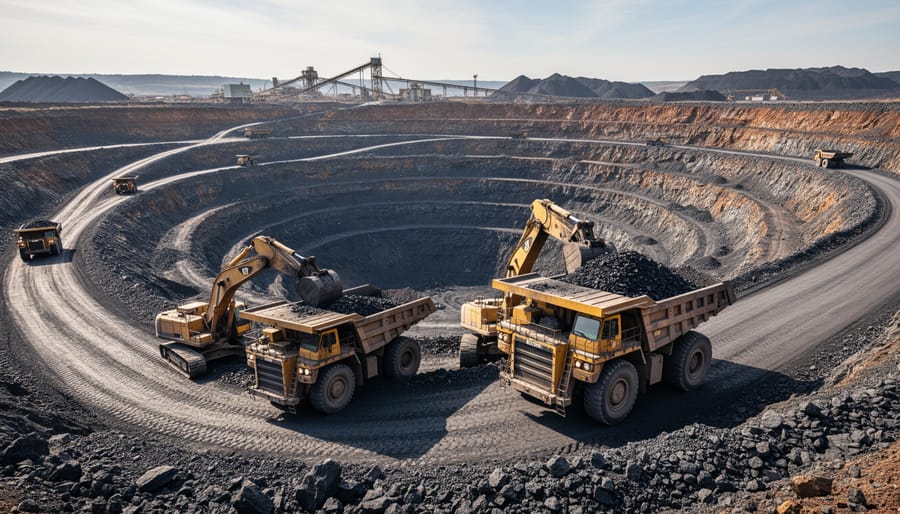
Fossil fuels generate electricity through combustion. Coal, oil, and natural gas are extracted from underground deposits through mining or drilling, then transported to power stations. In the combustion chamber, these fuels burn at high temperatures, releasing chemical energy stored over millions of years. This heat boils water to create pressurized steam, which drives turbines connected to generators that produce electricity. The process is straightforward but inefficient, with typical coal plants converting only 33-40% of fuel energy into usable power.
Nuclear fission operates differently. Uranium ore is mined, refined, and enriched to increase the concentration of fissionable uranium-235 isotopes. Inside a reactor core, controlled chain reactions split uranium atoms, releasing tremendous heat energy. This heat produces steam to turn turbines, similar to fossil fuel plants, but without combustion or direct carbon emissions during operation. Nuclear plants achieve higher thermal efficiency (around 33-37%) and run continuously for months between refueling cycles. Both processes require significant fuel extraction infrastructure and generate waste products, whether ash and emissions from combustion or radioactive spent fuel from fission reactions.
Renewable Resource Energy Capture
Renewable resources capture energy from ongoing natural processes rather than depleting stored reserves. Solar panels convert sunlight directly into electricity through photovoltaic cells, which generate current when photons strike semiconductor materials. This process works during daylight hours and varies with weather conditions, but the sun’s energy output remains constant from our perspective, we’re tapping a continuous flux rather than drawing down a finite stock.
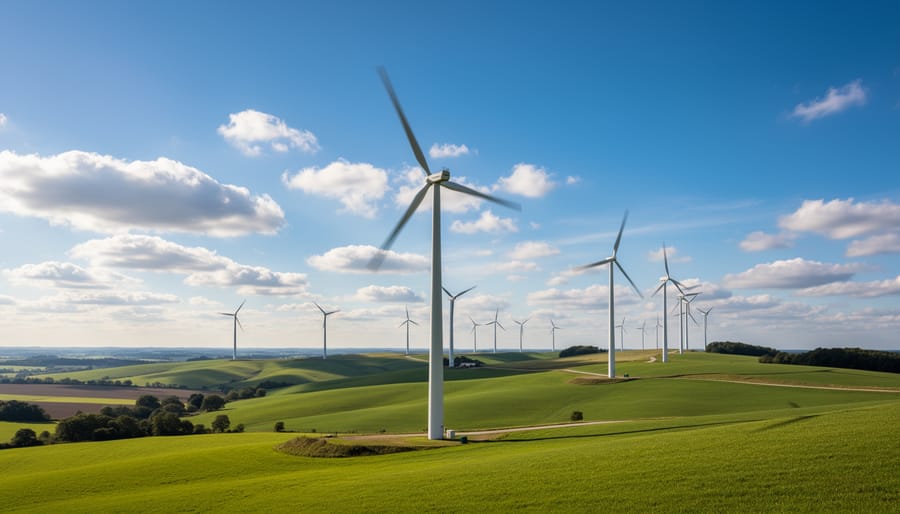
Wind turbines extract kinetic energy from moving air masses. Blades turn as wind flows past them, driving generators that produce electricity. The process depends on atmospheric circulation patterns driven by solar heating, which creates pressure differences and sustained air movement. Understanding why wind never runs out helps clarify how these systems differ fundamentally from fuel-based generation, the resource regenerates through planetary-scale thermal dynamics.
Hydropower captures gravitational potential energy from water moving downhill. Rivers, fed by precipitation in the water cycle, flow continuously through turbines. Run-of-river systems generate power from natural flow, while reservoir installations store water for controlled release, but both rely on the renewable hydrological cycle.
Biomass conversion releases energy stored through photosynthesis. When organic materials combust or undergo anaerobic digestion, they yield heat or biogas. The carbon released was recently captured from the atmosphere, making the cycle relatively short compared to fossil fuels, new plant growth absorbs carbon dioxide, creating a regenerative loop rather than a one-way extraction.
Three Categories of Energy Resources
Fossil Fuel Resources
Fossil fuels, coal, oil, and natural gas, formed from ancient organic matter buried and compressed over millions of years. Coal originated from prehistoric plant material in swamps and forests, typically requiring 300 million years or more to develop into combustible rock. Oil and natural gas formed from marine organisms trapped in sedimentary layers, undergoing heat and pressure transformation over similar geological timescales.
Each fuel type offers distinct energy characteristics. Coal provides high energy density and remains abundant globally, though combustion releases significant carbon dioxide and particulates. Oil delivers versatile liquid fuel for transportation and industry, extracted from underground reservoirs at varying depths. Natural gas burns cleaner than coal or oil, producing roughly half the carbon emissions of coal per unit of energy, making it a transition fuel in many European energy strategies.
These resources currently supply approximately 80% of global primary energy, powering baseload electricity generation, industrial processes, and transportation networks. However, their finite nature and carbon intensity drive the accelerating shift toward renewable alternatives. European nations are phasing out coal-fired plants while using natural gas as bridging capacity during renewable energy build-out, recognizing that extraction cannot match consumption rates indefinitely.
Nuclear Resources
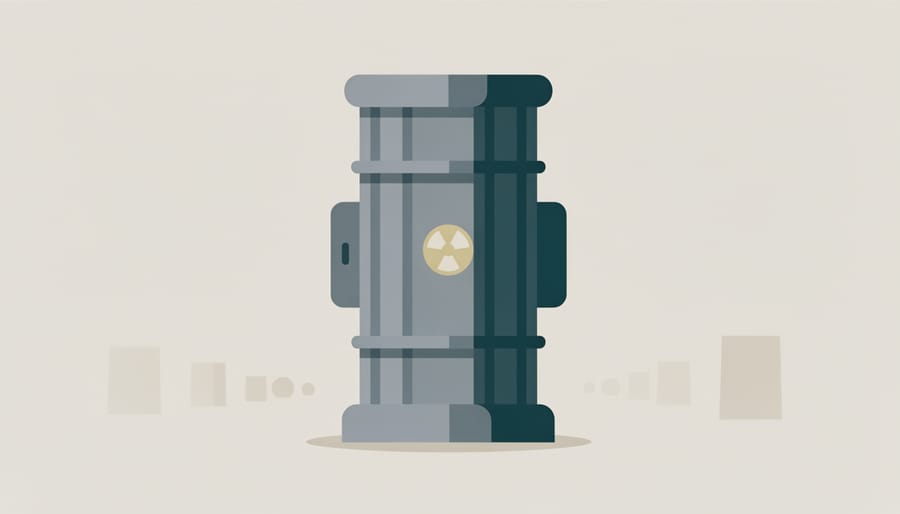
Nuclear energy relies primarily on uranium-235, with thorium emerging as a potential alternative fuel. These materials exist in finite quantities within the Earth’s crust, making them definitively nonrenewable despite their concentrated energy density. Unlike fossil fuels that form over millions of years, uranium and thorium were created during stellar processes before Earth’s formation, meaning no new supply is being generated.
Uranium deposits are distributed globally, with significant reserves in Kazakhstan, Canada, and Australia. Current proven reserves could sustain existing reactor fleets for decades at present consumption rates, though this timeline extends considerably with advanced reactor designs and fuel recycling. Thorium is roughly three times more abundant than uranium but requires different reactor technology to utilize effectively.
Nuclear resources play a distinct role in low-carbon baseload generation. A single uranium fuel pellet the size of a fingertip contains energy equivalent to one tonne of coal, enabling nuclear plants to generate consistent electricity with minimal land use and near-zero operational carbon emissions. This reliability makes nuclear valuable for grid stability in energy systems transitioning away from fossil fuels, particularly in regions with limited renewable resource potential. European countries like France demonstrate how nuclear can provide stable, low-carbon electricity alongside growing renewable capacity.
Renewable Energy Resources
Solar radiation delivers energy continuously as long as the sun shines. Photovoltaic panels convert this light directly into electricity, while solar thermal systems capture heat for water heating or power generation. Europe receives varying levels of solar irradiance, with southern regions like Spain averaging 1,600-2,000 kWh/m² annually compared to 900-1,200 kWh/m² in northern countries. Even on cloudy days, diffuse radiation remains available for capture.
Wind resources regenerate through atmospheric circulation driven by uneven solar heating of Earth’s surface. Wind turbines extract kinetic energy from moving air masses, with offshore installations in the North Sea and Baltic Sea accessing particularly strong and consistent wind speeds. Modern turbines operate across wind speeds from 3-25 m/s, converting mechanical rotation into electrical current through generators.
Hydropower harnesses the gravitational potential energy of water as it flows downhill. Rivers continuously renew through precipitation cycles, allowing run-of-river and reservoir systems to generate electricity reliably. Norway produces over 90% of its electricity from hydro resources, demonstrating long-term viability.
Biomass includes organic materials like wood pellets, agricultural residues, and energy crops that regrow within months or years. Combustion or anaerobic digestion converts stored chemical energy into heat and power, with the carbon released offset by new plant growth during the next cycle.
Geothermal energy taps heat from Earth’s interior, continuously replenished by radioactive decay in the planet’s core. While extraction rates can temporarily deplete local reservoirs, the underlying heat source remains available across geological timescales.
How These Resources Are Used in Practice
In homes, commercial buildings, and industrial facilities across Europe, energy resources power everything from lighting and heating to manufacturing processes and data centers. Fossil fuels still dominate in many applications, natural gas heats millions of European homes, diesel powers logistics fleets, and coal remains significant in some industrial sectors despite declining use. Nuclear plants provide baseload electricity in countries like France, where they supply roughly 70% of the grid, offering stable power for urban centers and heavy industry.
Renewable resources are increasingly integrated across all sectors. Solar panels now appear on residential rooftops, commercial warehouses, and ground-mounted arrays feeding utility-scale installations. Wind farms generate electricity for national grids, while biomass heating systems serve district heating networks in Nordic countries. Hydropower provides both baseload generation and rapid-response capacity to balance variable renewable output.
Project developers and system integrators face distinct practical considerations depending on the resource. Fossil fuel and nuclear projects involve centralized infrastructure with long lead times, permitting, construction, and grid connection can span years. Renewable deployments vary widely: a rooftop solar installation might take weeks, while offshore wind projects require multi-year planning cycles involving marine surveys, specialized vessels, and complex grid integration.
European markets present specific deployment factors. Grid connection requirements differ by country, and intermittency management becomes critical as renewable penetration increases. Battery storage, demand response, and cross-border interconnectors help balance supply. For professionals entering this field, understanding these practical constraints matters as much as knowing the resources themselves, those looking to choose solar training programs should prioritize courses covering real-world system design and regulatory frameworks alongside technical fundamentals.
Common applications include:
- Electricity generation for residential, commercial, and industrial consumption
- Heating and cooling systems using gas, biomass, or geothermal resources
- Transportation fuels from petroleum products and emerging biofuels
- Industrial processes requiring high-temperature heat from fossil fuels or concentrated solar
- Hybrid systems combining renewable generation with gas peaker plants or battery storage
System integrators increasingly design hybrid solutions that combine multiple resources, pairing solar with gas backup, or wind with hydropower storage, to meet reliability requirements while reducing carbon intensity. Understanding how each resource behaves in practice determines project success.
Resource Sustainability and Environmental Impact
Understanding the environmental footprint of energy resources guides smarter system design and investment decisions. Fossil fuels release approximately 400-1,000 grams of CO₂ per kilowatt-hour generated, while nuclear produces roughly 12 grams per kWh when accounting for the full lifecycle, and renewables like wind and solar emit just 10-40 grams per kWh. These differences compound across decades of operation, making resource choice the single largest factor in a project’s climate impact.
Nonrenewable resources carry two fundamental sustainability challenges: depletion and persistent emissions. Coal, oil, and natural gas reserves formed over millions of years and cannot regenerate on human timescales. Even with current extraction rates, proven fossil fuel reserves face depletion within 50-150 years depending on the resource and region, creating long-term supply risks. Nuclear fuel faces similar constraints, with economically viable uranium reserves projected to last 90-130 years at present consumption. Beyond depletion, combustion-based systems produce air pollutants including sulfur dioxide, nitrogen oxides, and particulate matter that affect local air quality and public health, costs often excluded from conventional energy pricing.
Renewable resources avoid both problems through continuous natural replenishment and minimal operational emissions. Solar radiation, wind patterns, and water cycles regenerate daily, making supply constraints a matter of technology deployment rather than resource exhaustion. Lifecycle emissions remain low because manufacturing impacts are amortized across 25-30 years of clean generation. However, renewables require careful land use planning and material sourcing, solar panels need rare earth elements, and wind turbines require steel and composites, so responsible supply chains matter for true sustainability.
The transition from nonrenewable to renewable resources directly supports climate targets like the EU’s goal of net-zero emissions by 2050. Replacing coal and gas generation with wind and solar eliminates the largest single source of greenhouse gases in most European nations. Energy security improves simultaneously: domestic renewable generation reduces reliance on imported fossil fuels, stabilizing costs and supply during geopolitical disruptions. For professionals entering the field, understanding these sustainability differences clarifies why employers prioritize renewable skills, learning to become a wind technician or specialize in solar installation positions you within a sector built for long-term growth rather than managed decline.
Common Questions About Energy Resources
Can renewable energy fully replace fossil fuels?
Yes, technically renewables can meet global energy demand, but the transition requires substantial investment in generation capacity, energy storage, and grid infrastructure. Most energy roadmaps project a renewable-dominated system by 2050, though the pace depends on policy support, technology costs, and regional grid capabilities.
Why do we still rely on fossil fuels if they’re finite?
Fossil fuels remain dominant because existing infrastructure is built around them, they provide dispatchable power on demand, and transition costs are significant. The shift is underway, but energy systems change gradually due to capital investment cycles, workforce retraining needs, and the sheer scale of replacing decades of built infrastructure.
What makes a resource truly renewable?
A resource is renewable if it replenishes at a rate equal to or faster than human consumption. Solar radiation arrives continuously, wind regenerates through atmospheric circulation, and biomass regrows within years or decades, unlike fossil fuels that take millions of years to form.
How long will nonrenewable resources last?
Estimates vary by resource and consumption rate. Proven coal reserves could last over 100 years at current use, oil roughly 50 years, and natural gas 50-60 years, though new discoveries and changing demand alter these projections. The real question isn’t depletion timelines but climate constraints that make burning remaining reserves untenable.
These questions reflect the practical concerns facing anyone entering the energy sector today. Students often worry whether career prospects in renewables are premature if fossil fuels still dominate, while project developers need to understand the economics driving transition timelines.
One misconception that persists is that renewable resources are limitless in a practical sense. While sunlight and wind are inexhaustible, the materials for panels, turbines, and batteries are not. Responsible renewable deployment means considering the full lifecycle, including mining impacts for lithium, cobalt, and rare earth elements. This doesn’t undermine renewables’ sustainability advantage, but it does require thoughtful resource management and circular economy approaches.
Another common question concerns reliability. Some assume renewables can’t provide consistent power because the sun doesn’t always shine. Modern systems address this through diversified generation portfolios, battery storage, demand response programs, and interconnected grids that balance supply across regions. Countries like Denmark and Portugal already demonstrate that high renewable penetration works when paired with proper system planning.
For professionals considering the transition from conventional energy roles, understanding that both resource types will coexist during the transition period is crucial. Skills in hybrid systems, grid integration, and energy storage are valuable precisely because managing this transition requires knowledge of how both renewable and nonrenewable resources function within real energy infrastructure.
Understanding the distinction between renewable and nonrenewable resources isn’t just academic knowledge, it’s a foundational requirement for anyone working in or entering the energy sector in 2026. Whether you’re a project developer evaluating site feasibility, a system integrator designing hybrid solutions, or a policy professional shaping transition strategies, recognizing how these resources function, scale, and interact within energy systems directly impacts your effectiveness.
The European energy landscape continues to shift rapidly, with renewable deployment accelerating alongside persistent baseload challenges. Professionals who grasp both resource categories can navigate this complexity, make informed decisions about technology choices, and contribute meaningfully to decarbonization efforts.
For those looking to build deeper expertise, structured renewable energy education through online and distance learning programs offers practical pathways. Today’s courses emphasize real-world application, grid integration, resource assessment, project economics, and regulatory frameworks, equipping learners with skills employers actively seek. As the energy transition accelerates, professionals who understand how different resources complement each other, rather than viewing them in isolation, will shape the resilient, sustainable systems powering Europe’s future.