Barbara
Renewable energy comes from natural sources that never run out, like sunshine, wind, and flowing water. Unlike coal or oil that disappear once we burn them, these energy sources refill themselves naturally and can power our homes, schools, and cities without polluting the air we breathe.
Think of it this way: when you leave a toy outside in the sun, it gets warm. Solar panels work similarly, capturing that warmth and light to create electricity. Wind turbines are like giant pinwheels that spin when the breeze blows, generating power for thousands of homes. Hydroelectric dams use the force of rivers and waterfalls, much like a waterwheel at an old mill.
Children growing up in 2026 will live in a world increasingly powered by these clean sources. Across Europe, wind farms dot coastlines and hillsides, while solar panels cover rooftops from Portugal to Finland. This shift matters because burning fossil fuels releases carbon dioxide, which traps heat in our atmosphere and changes our climate. Renewable energy produces electricity without these harmful emissions.
Understanding these concepts early helps young people recognize why their schools might have solar panels or why they see tall white turbines during countryside trips. The transition to renewable energy isn’t just about technology. It represents a fundamental change in how we produce electricity, creating new careers and protecting the environment for future generations. Teaching children these principles builds awareness of sustainable practices they’ll carry throughout their lives.
What Is Renewable Energy? A Kid-Friendly Explanation
Renewable energy is power we can use over and over again because nature constantly replaces it. Think of it like this: when you eat an apple from a tree, that tree will grow more apples next year. Renewable energy replenishes naturally in the same way. The sun keeps shining, the wind keeps blowing, rivers keep flowing, and plants keep growing. We can turn all of these into electricity and heat without worrying they’ll run out.
Non-renewable energy works differently. Coal, oil, and natural gas took millions of years to form deep underground. Once we burn them, they’re gone. It’s like having a box of 100 crayons. If you use one crayon each day without getting new ones, you’ll eventually run out. That’s non-renewable energy. But renewable energy is like having crayons that magically refill themselves every night.
Here’s why this matters for your generation. The energy choices we make today affect the air you breathe, the climate you’ll experience as adults, and the jobs you might have someday. Factories, schools, hospitals, and homes all need energy to work. Right now, many European countries and nations worldwide are switching their power sources from non-renewable to renewable. This shift means cleaner air in cities, fewer harmful gases warming the planet, and new career opportunities in designing, building, and maintaining these energy systems.
When you understand renewable energy now, you’re preparing for a world where these technologies power everything from the phones you use to the buildings you live in. The engineers, technicians, and scientists needed for this energy transition start as curious kids asking exactly the question you’re exploring today.
The Main Types of Renewable Energy Children Should Know
Solar Energy: Power from the Sun
Solar energy is the most visible type of renewable power children encounter daily. Photovoltaic cells convert sunlight directly into electricity through a process kids can understand: special materials in solar panels capture light particles and turn them into electrical current.
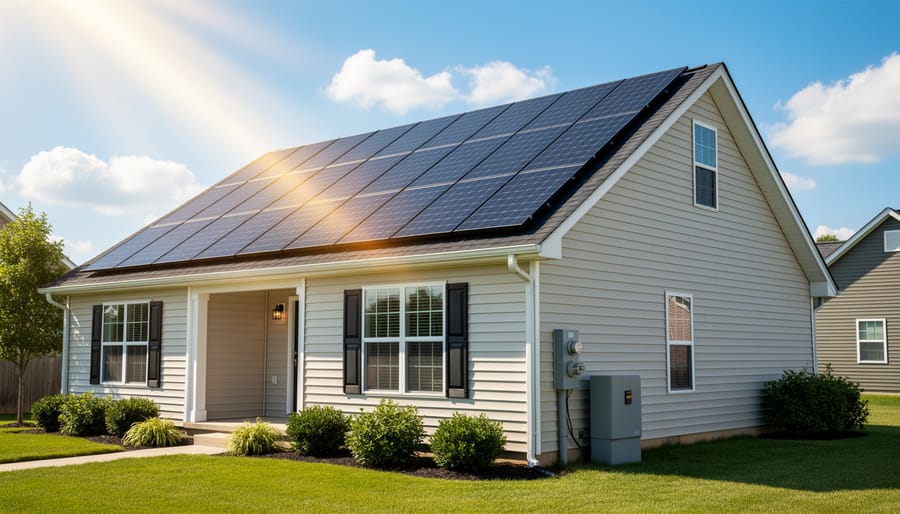
Children might already recognize solar panels on their school rooftop, a neighbour’s house, or powering small devices like calculators and garden lights. Larger solar farms, increasingly common across European countryside, contain thousands of panels arranged in rows to generate electricity for entire communities. The process is silent, produces no pollution, and works whenever the sun shines. Learning all about photovoltaic technology helps children understand how this abundant energy source will power future homes, factories, and production facilities across Europe and beyond.
Wind Energy: Capturing the Breeze
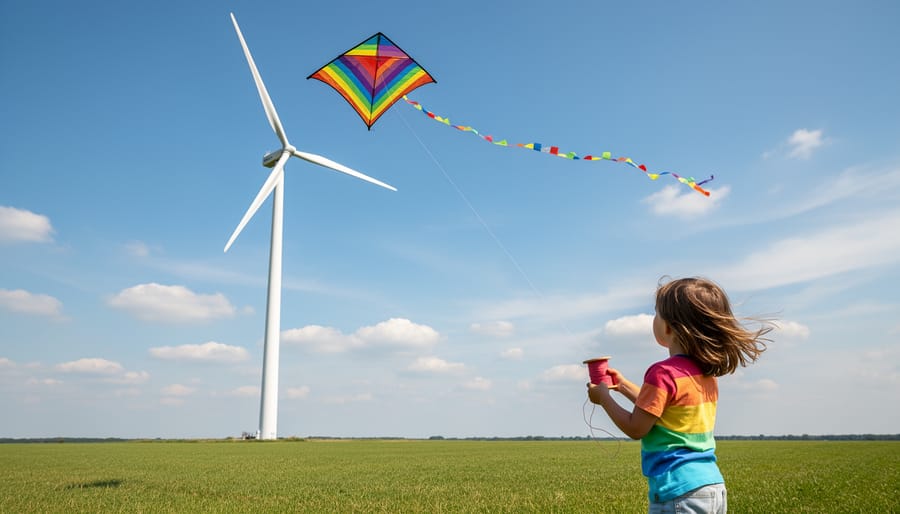
Wind is moving air, and we can catch it to make electricity. Wind turns turbine blades that spin a generator inside a tall tower, similar to how pedaling your bike powers its light. These towers, called wind turbines, stand as tall as 20-story buildings and group together in wind farms. Germany has over 30,000 wind turbines across its countryside and coasts, while Denmark generates nearly half its electricity from wind. You might spot these giant white towers along motorways, in open fields, or offshore in the North Sea. Each turbine’s three blades rotate steadily even in gentle breezes, constantly producing clean power for thousands of homes. To understand wind energy basics just watch leaves rustling or flags flapping, that same force, when captured at scale, powers factories, schools, and entire cities across Europe without burning any fuel.
Hydropower: Energy from Moving Water
Water constantly flows in rivers and streams, and that moving water holds enormous power. Hydropower captures this energy using dams and turbines, imagine a giant water wheel connected to an electricity generator. When water rushes through turbines at a dam, it spins them quickly, creating electricity for homes and factories. Europe has harnessed this natural force for generations, with major hydropower installations operating along the Rhine, Danube, and across Scandinavia’s fjords. Norway produces nearly all its electricity from water, while Austria and Switzerland rely heavily on mountain rivers for clean energy. You might have seen a dam during a family trip or noticed smaller water wheels at historic mills. These installations demonstrate the same principle: flowing water does work without burning fuel or creating pollution. To dive deeper into this concept, check out hydro power explained for additional learning resources. Hydropower remains one of the oldest and most reliable renewable sources, proving that nature’s constant motion can reliably power modern life.
Biomass and Geothermal: Earth’s Hidden Energy
Biomass turns organic materials like wood chips, crop waste, and even food scraps into usable energy. Think of it as recycling plant matter that would otherwise decompose, capturing the energy stored inside through controlled burning or chemical processes. Many European farms now generate power from agricultural waste that once sat unused in fields.
Geothermal energy taps into the Earth’s natural heat from deep underground. In countries like Iceland, this heat warms homes and generates electricity by bringing hot water and steam to the surface through drilled wells. The Earth acts like a giant battery that never runs out, constantly producing heat from its molten core. While we can’t see this energy source working above ground like spinning wind turbines, it reliably powers communities year-round regardless of weather conditions.
Why Renewable Energy Matters in Global Production Engineering
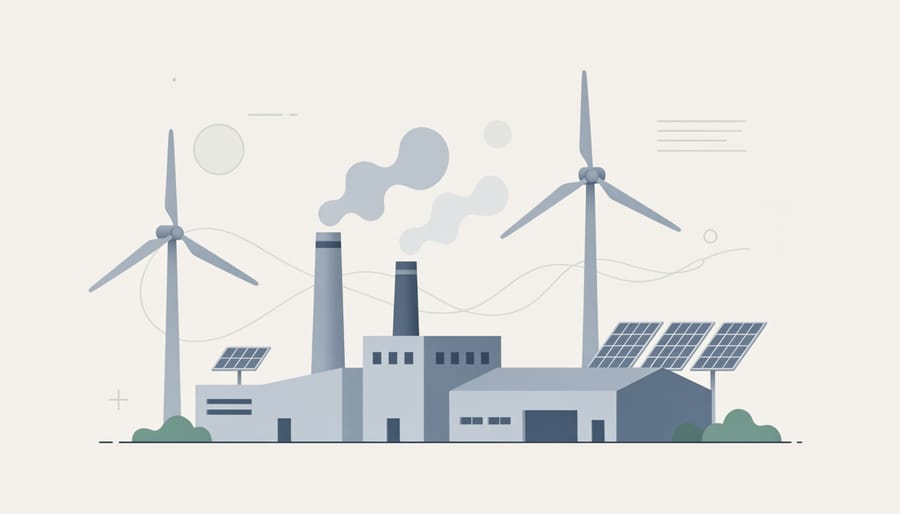
When children learn about solar panels and wind turbines, they are glimpsing the power sources now transforming factories across Europe and beyond. Modern manufacturing facilities once relied almost entirely on coal and natural gas, but by 2026, industries from automotive plants in Germany to electronics factories in China are shifting to renewable electricity. This transition isn’t just about reducing pollution; it’s about building an entirely new way to produce the goods we use every day, and that shift requires skilled professionals who understand both engineering principles and renewable energy systems.
Global Production Engineering combines manufacturing expertise with sustainability goals, creating production systems that run on clean power while maintaining efficiency and quality. A car assembly line powered by rooftop solar, a steel mill using wind-generated electricity, or a food processing plant drawing energy from biomass all represent real applications of the renewable concepts kids encounter in their first lessons. Understanding these connections early helps young learners see renewable energy not as abstract science but as practical technology shaping how everything from smartphones to bicycles gets made.
The knowledge children gain today about energy sources, conversion processes, and efficiency directly relates to tomorrow’s engineering challenges. A twelve-year-old experimenting with a small solar panel is developing the same cause-and-effect thinking a photovoltaic system designer uses when optimizing panel placement on a factory roof. A student who grasps how wind turbines convert kinetic energy into electricity has laid groundwork for understanding industrial power management, grid integration, and backup systems that keep production lines running reliably.
Europe’s manufacturing sector particularly needs this pipeline of informed future workers. As production facilities upgrade to meet 2030 and 2040 emission targets, they require professionals who can design renewable-powered systems, troubleshoot hybrid energy setups, and integrate storage solutions. The child learning renewable basics today might become the project developer who installs a biomass heating system in a textile factory, the system integrator who connects wind farms to automated warehouses, or the production engineer who redesigns manufacturing processes around variable renewable supply.
Adapted Learning Approaches for Teaching Renewables to Young People
Teaching renewable energy concepts to children requires different strategies than adult education. The most successful approaches match the learning method to the child’s developmental stage and tap into natural curiosity about how things work.
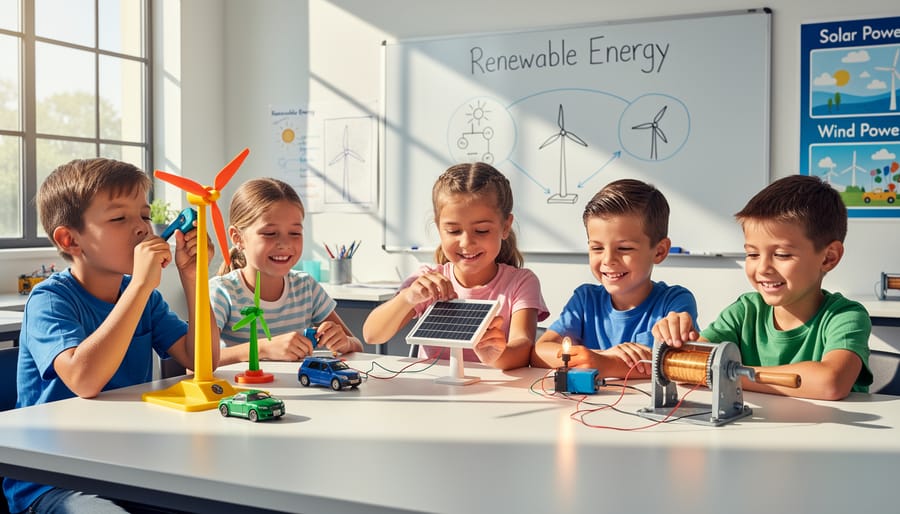
For children aged 7 to 10, hands-on experimentation beats abstract explanation every time. Building a simple solar oven from a pizza box and aluminum foil demonstrates thermal energy capture in ways a textbook never could. Similarly, constructing miniature wind turbines from recycled materials and measuring their output with small LED lights makes energy conversion tangible. These experiments work because children at this age learn primarily through direct manipulation of objects and immediate visual feedback.
European STEM education programs typically emphasize inquiry-based learning, where students form questions before receiving answers. A German primary school class might start by observing rooftop solar panels in their neighborhood and listing what they notice before the teacher explains photovoltaic technology. This approach, common across Scandinavia and central Europe, builds critical thinking alongside technical knowledge rather than treating children as passive recipients of information.
Older learners aged 11 to 14 can handle more technical concepts when presented through interactive demonstrations. A classroom wind tunnel lets students test different blade designs and graph efficiency results. Solar panel experiments can incorporate basic electrical measurements, voltage comparisons, and performance variations based on angle and lighting conditions. At this stage, connecting renewable energy principles to mathematics and physics curricula reinforces both subjects simultaneously.
Different learning styles require different entry points to the same material. Visual learners benefit from diagrams showing energy flow through systems. Kinesthetic learners need to assemble components themselves. Auditory learners might discuss renewable energy challenges in small groups or explain concepts to peers. Effective programs incorporate all three approaches within the same lesson rather than forcing every child through identical activities.
Digital resources complement physical experiments, particularly for concepts difficult to demonstrate in a classroom. Online platforms let students adjust variables in a virtual solar farm and observe output changes, or design wind turbine layouts for different terrain. These tools provide immediate feedback and allow for experimentation that would be impractical with actual equipment.
The most impactful programs connect classroom learning to real-world applications children can observe in their communities. Field trips to local solar installations, wind farms, or biomass facilities transform abstract concepts into concrete industrial processes. When children see engineers maintaining turbines or monitoring renewable energy systems, they recognize these technologies as practical solutions rather than distant theoretical ideas. This connection between what they learn and what they might do professionally establishes renewable energy education as relevant to their futures, not just their homework.
Current Renewable Energy Education Programs and Initiatives (2026)
Several major programs in 2026 demonstrate the growing commitment to renewable energy education across North America and beyond, with initiatives specifically designed to reach children through hands-on learning experiences.
REpowering Schools (REpS) and KidWind have opened nominations for the 2026 Renewable Energy Education Awards, recognizing students, educators, schools, and industry partners who excel in renewable energy education. These awards celebrate the individuals and institutions making renewable concepts accessible and engaging for young learners, creating pathways from classroom curiosity to practical understanding. The recognition highlights excellence across different stakeholder groups, from the teachers developing innovative lesson plans to the industry partners supporting educational infrastructure.
The 18th annual Kids’ World of Energy Festival represents one of North America’s most ambitious renewable energy education events. Running through February and March 2026, this Canada-wide STEM festival reaches approximately 2,400 students across more than 80 classes. Festival days take place in schools throughout British Columbia, Alberta, Saskatchewan, Ontario, Quebec, and Nova Scotia, bringing multi-week programming directly to students rather than requiring travel to centralized locations. Each participating class experiences a full day of STEM workshops focused on energy concepts, giving children direct exposure to renewable technologies and principles through structured, age-appropriate activities.
| Program Name | Location/Reach | Target Audience |
|---|---|---|
| 2026 Renewable Energy Education Awards | North America (REpS/KidWind network) | Students, educators, schools, industry partners |
| Kids’ World of Energy Festival | Canada-wide (6 provinces, 80+ classes) | 2,400 students in participating schools |
These initiatives reflect a broader shift in how renewable energy education reaches children. Rather than treating sustainability as an abstract future concept, current programs emphasize tangible experiences that connect scientific principles to real-world applications. The growth of these festivals, competitions, and recognition programs signals increasing collaboration between educational institutions, industry stakeholders, and renewable energy advocates.
European schools have similarly expanded renewable energy curricula, with many countries integrating sustainability concepts into national education standards. While specific program structures vary by region, the common thread remains practical, accessible learning that prepares students for the energy landscape they will inherit and help shape as future professionals in global production engineering and related fields.
Practical Activities Parents and Educators Can Use Today
Turning abstract concepts into tangible experiences makes renewable energy stick. These hands-on activities bring solar, wind, and water power into everyday learning environments without requiring specialized equipment or extensive budgets.
Start with solar fundamentals through everyday observation. Have children track sunlight patterns throughout the day by marking shadows at hourly intervals, then discuss how predictable sun movement makes solar energy reliable. A solar distilling activity demonstrates practical energy conversion, children can evaporate and condense salt water using only sunlight, a clear container, and plastic wrap, creating drinkable water while witnessing solar thermal energy in action.
Build a simple wind turbine using a plastic bottle, cardboard blades, and a small LED light. When children blow on the blades or position their turbine near a fan, they generate enough electricity to illuminate the LED, making the wind-to-electricity pathway visible and immediate. Older students can experiment with blade angles and shapes, comparing energy output through measurable LED brightness differences.
Construct a waterwheel from a plastic bottle, wooden spoons, and a rubber band. Position it under a flowing tap or in a stream to demonstrate hydropower principles. Children can attach small weights to the rubber band and observe how water flow speed affects lifting capacity, connecting flow rates to energy generation potential they might see at European hydropower installations.
Digital resources extend learning beyond physical experiments. NASA’s Climate Kids website offers interactive renewable energy games tailored for ages 8-13, while the European Environment Agency provides child-friendly infographics showing real renewable energy installations across member states. These visual connections help children recognize technologies in their own communities.
Scale activities by age and technical readiness. Seven-to-nine-year-olds focus on observation and simple cause-and-effect, while ten-to-twelve-year-olds can measure outputs and compare variables. Teenagers aged thirteen to fifteen engage with efficiency calculations, cost-benefit analyses, and connections to production engineering careers. This progression builds foundational understanding that supports later technical training in photovoltaic systems, wind technology, and sustainable manufacturing processes.
Building Tomorrow’s Renewable Energy Workforce
The solar panel a child helps assemble in a school workshop could spark the career that designs utility-scale photovoltaic arrays a decade later. Early exposure to renewable energy concepts creates more than environmental awareness; it builds the technical foundation and genuine interest that professional training programs require.
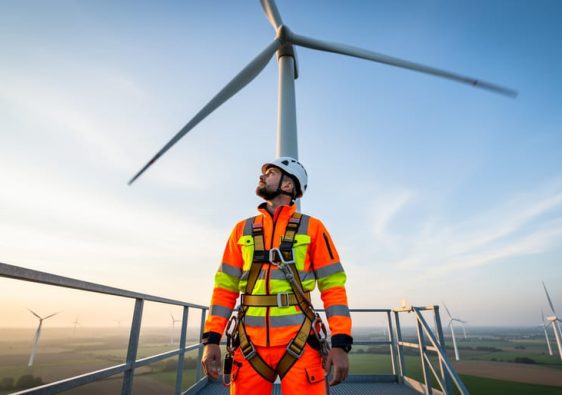
Europe’s renewable energy sector faces a documented skills shortage as installations accelerate. Germany’s wind industry alone needs thousands of qualified technicians annually, while solar thermal and photovoltaic projects across the continent compete for experienced system integrators. These professionals do not emerge overnight. They typically start as curious children who asked how things worked, experimented with simple circuits, or visited a wind farm on a school trip.
The pathway from childhood engagement to professional competence follows recognizable patterns. A 10-year-old who builds a model solar car develops spatial reasoning and basic electrical concepts. At 14, that same student might join a school renewable energy club, learning about circuit design and energy conversion efficiency. By 18, they enter vocational programs or engineering degrees with clearer career direction than peers who encountered these technologies for the first time at university.
Practical childhood experiences translate directly to professional skills. Understanding why wind turbines face certain directions helps future project developers evaluate site conditions. Recognizing how sunlight angle affects panel output prepares engineers to optimize installation geometry. Even basic concepts like energy storage challenges introduce problems these future professionals will solve throughout their careers.
Current educational initiatives reflect this long-term workforce development perspective. Programs connecting renewable energy concepts to hands-on learning recognize that today’s engaged 12-year-old becomes tomorrow’s production engineer, sustainability consultant, or installation technician. The technical complexity of modern renewable systems demands professionals who have internalized these principles over years, not months.
The children learning renewable energy basics in 2026 will enter the workforce during the 2030s and 2040s, exactly when Europe targets its most ambitious climate goals. Their early education is not simply science enrichment. It is strategic workforce preparation for an industry that will define global production engineering for generations.
Common Questions About Teaching Renewable Energy to Children
Parents and educators often hesitate before introducing renewable energy topics, unsure whether the concepts suit young minds or require expensive equipment. These concerns are understandable, but evidence from programs like the 2026 Renewable Energy Education Awards and the 18th annual Kids’ World of Energy Festival demonstrates that children across age groups engage successfully with renewable energy concepts when the approach matches their developmental stage.
At what age should children start learning about renewable energy?
Children as young as five can grasp basic concepts like “the sun gives us energy” through observation and play. By age seven, most are ready for structured lessons about solar panels and wind turbines, while 11-14 year-olds can explore technical principles like energy conversion and grid integration.
Do I need expensive equipment to teach renewable energy effectively?
Most foundational lessons require only household items: cardboard boxes become solar ovens, desk fans demonstrate wind resistance, and water wheels can be built from plastic bottles. Dedicated kits enhance the experience but aren’t essential for initial engagement.
How do I keep lessons fun without oversimplifying the science?
Start with the observable phenomenon (a solar panel charging a phone), then layer in explanation (light energy becomes electrical energy). Children accept complexity when it connects to something tangible they’ve witnessed.
Should I address climate change when teaching renewables to young children?
Frame the conversation around solutions rather than catastrophe. Focus on how renewable energy helps our communities and creates exciting careers, mentioning environmental benefits without dwelling on anxiety-inducing scenarios.
The question of effectiveness deserves particular attention. The 2,400 students participating across British Columbia, Alberta, Saskatchewan, Ontario, Quebec, and Nova Scotia in the February-March 2026 festival demonstrate measurable engagement through hands-on STEM workshops. REpowering Schools and KidWind track outcomes through their awards program, which honors students, educators, schools, and industry partners showing documented progress.
Resource constraints rarely prove insurmountable. Public libraries in many European cities stock renewable energy kits, and online platforms offer free lesson plans aligned with national curricula. The time investment matters more than the budget. A well-structured 30-minute session exploring how photovoltaic cells work delivers more value than unfocused browsing of educational videos.
Assessment takes different forms depending on age. Young children show understanding through drawing, model-building, and verbal explanation. Older students can complete simple calculations, compare energy sources systematically, or design basic renewable systems for specific applications. The goal isn’t creating junior engineers but building foundational literacy that supports informed choices later.
Teaching renewable energy to children is not just an educational exercise. It is a strategic investment in the future workforce that will design, build, and operate the sustainable production systems Europe and the world urgently need. When a seven-year-old builds a simple solar oven or a twelve-year-old assembles a model wind turbine, they are not merely completing a school project. They are developing the curiosity, technical intuition, and systems thinking that will serve them throughout careers in photovoltaic installation, wind farm development, or renewable-powered manufacturing.
The programs and initiatives emerging in 2026, from the Renewable Energy Education Awards to the Kids’ World of Energy Festival reaching 2,400 students across Canada, demonstrate that educators worldwide recognize this connection. These efforts bridge the gap between abstract environmental concepts and concrete engineering applications, showing children that renewable energy is not a distant aspiration but a practical, achievable reality shaping industries today.
For parents, educators, and organizations committed to Europe’s energy transition, the path forward is clear. Explore the educational programs available in your region. Implement the adapted learning approaches that match your students’ ages and interests. Use the practical activities that transform abstract concepts into hands-on discovery. Every child who understands how a solar panel works, who grasps why wind energy matters, or who sees the connection between renewable power and manufacturing is one step closer to becoming the skilled professional our industries will need tomorrow. The foundation we build in their minds today will power the sustainable production engineering of the future.