Barbara
Wind turbine technician training in 2026 typically costs between €1,400 and €11,600 (approximately $1,500 to $12,600 USD), depending on program depth and delivery format. Short certificate courses average around €1,600 ($1,750 USD), while comprehensive academy programs preparing you for immediate tower work run closer to €11,600 ($12,600 USD) including application fees and specialized simulation software.
The price spread reflects fundamentally different training models. Online certificate programs lasting three to eight months emphasize theoretical foundations, turbine systems, and electrical diagnostics through virtual simulations. These suit career changers testing the waters or technicians adding wind qualifications to existing mechanical skills. At the other end, immersive academy formats compress hands-on training into intensive three-week programs or extended courses with real nacelle practice, confined-space certifications, and rescue training using actual tower environments.
What drives costs upward? Hands-on access accounts for the steepest premium. Programs offering physical turbine components, nacelle mockups, or partnerships with operational wind farms necessarily charge more than screen-based courses. Certification bundles also add expense. Many European training providers include GWO (Global Wind Organisation) safety modules, working-at-height qualifications, and first-aid certifications within tuition, while budget programs leave these essential credentials for separate purchase at €300 to €800 each.
Pay-as-you-learn structures have emerged as a middle path. Some providers allow initial enrollment for around €530 ($580 USD), covering foundational modules and first exams, with subsequent units purchased individually. This reduces upfront commitment for professionals uncertain about long-term fit in the sector.
For context, wind technician roles across Europe currently show median starting salaries around €35,000 to €42,000 annually, with offshore and senior positions exceeding €55,000. Training costs therefore represent roughly 3-25% of first-year earnings, making even premium programs financially accessible compared to university degrees. The choice isn’t simply cheapest versus best, but rather matching program structure to your existing skillset, regional employer preferences, and tolerance for self-directed versus guided learning.
Training Program Costs by Format and Intensity
Online Certificate Programs
Online certificate programs represent the most accessible entry point into wind turbine technician training, with most offerings falling between $1,500 and $2,000. The typical certificate costs $1,750 and delivers foundational knowledge through a fully online format suited to working professionals or those testing the field before committing to intensive programs.
At this price point, you’ll receive a complete learning package: video lectures covering turbine systems and components, interactive modules on electrical theory and mechanical principles, downloadable technical manuals, and laboratory simulation software that mimics real-world turbine diagnostics. Most programs bundle exam access and certification processing into the tuition rather than charging separately.
The pay-as-you-learn model offers even greater flexibility. You can start with an initial registration of $580, which includes all learning materials, lab simulation software, and access to the first module exam. This lets you gauge the program’s fit and your interest in the field before investing the full amount. If you decide to continue, you’ll pay for subsequent modules as you progress through the curriculum.
This approach works well if you’re exploring career options, need to spread costs over several months, or want to balance training with current employment. The trade-off is limited hands-on experience, online formats can’t replicate climbing a 90-meter tower or working with high-voltage systems under supervision. They build theoretical knowledge and software-based diagnostic skills but typically require supplemental practical training before employers will put you on actual turbines.
Accelerated Intensive Programs
Accelerated intensive programs compress fundamental wind turbine technician training into a three-week format, targeting career changers and professionals who need rapid credentialing without extended time away from employment. These programs typically cost between $3,500 and $6,000, positioning them above basic online certificates but below comprehensive academy tracks. The condensed timeline prioritizes essential safety protocols, electrical systems fundamentals, turbine component identification, and basic troubleshooting procedures that meet minimum industry entry requirements.
The primary trade-off centers on depth versus speed. Three-week formats cover core competencies but sacrifice the extended hands-on practice, advanced diagnostic training, and specialized equipment exposure that eight-month programs provide. Students receive enough technical foundation to secure entry-level positions with supportive employers willing to provide on-site mentorship, but may face steeper learning curves during initial field assignments compared to academy graduates. The accelerated approach suits candidates with relevant electrical or mechanical backgrounds who can leverage prior experience to fill knowledge gaps, or those entering markets where demand significantly exceeds supply and employers prioritize immediate availability over extensive pre-employment training.
Comprehensive Academy Programs
Comprehensive academy programs represent the most thorough preparation for a wind turbine technician career, combining extended classroom instruction with substantial hands-on training. These programs typically span eight months and cost around $12,600, which includes a $100 non-refundable application fee. At this price point, you’re investing in a complete technical education rather than introductory coursework.
The eight-month training format delivers comprehensive coverage of everything required to service, diagnose, repair, and install wind turbines and related equipment. You’ll work through electrical systems theory, hydraulics, mechanical troubleshooting, and high-voltage safety protocols. Programs at this level dedicate significant time to practical skills: climbing turbines safely, performing nacelle inspections, diagnosing control system faults, and executing emergency procedures. This hands-on component, often conducted on full-scale training turbines or high-fidelity simulators, accounts for much of the cost difference compared to shorter online options.
Curriculum depth matters here. Academy programs don’t just teach you what components do; they train you to interpret error codes, assess wear patterns, calibrate sensors, and document maintenance according to manufacturer specifications. You’ll likely complete modules on grid integration, environmental monitoring systems, and site-specific operational considerations that reflect real working conditions across Europe’s diverse wind installations.
The application fee structure, while non-refundable, ensures committed enrollment and covers initial program administration. For career changers or those seeking direct entry into the wind energy sector without prior electrical experience, this level of investment provides the most direct pathway to technician roles. Employers recognize graduates from comprehensive programs as job-ready, reducing their training overhead and improving your placement prospects.
What’s Included in Your Tuition
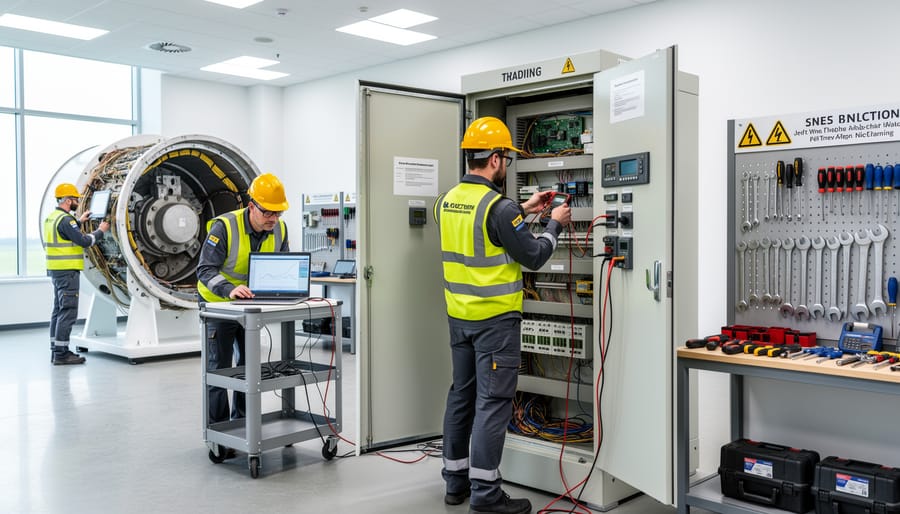
Understanding what you receive for your tuition investment helps explain the price differences between programs and ensures you’re comparing apples to apples. Wind turbine technician training costs encompass far more than just access to course materials, and providers bundle these components differently.
Entry-level programs priced around $1,750 typically include comprehensive packages designed to get you started without additional purchases. The $580 initial registration that many programs offer covers all essential learning materials, laboratory simulation software access, and your Module 1 exam, meaning you can begin learning immediately without hunting for supplementary resources. This bundled approach eliminates the hidden costs that plague some vocational training programs where students discover they need to purchase textbooks, software licenses, or exam vouchers separately.
More comprehensive programs at higher price points, such as the eight-month academies costing $12,600, justify their investment through expanded inclusions. These typically provide:
- Complete curriculum materials covering servicing, diagnosing, repairing, and installing wind turbines
- Advanced laboratory simulation software for multiple training modules
- Hands-on equipment access for practical skill development
- All certification exam fees and processing
- Direct instructor support throughout the program duration
- Ongoing learning platform access for reference and updates
- Career services and job placement assistance where available
The quality of hands-on components varies significantly and drives much of the cost difference. Programs offering access to actual turbine nacelles, electrical systems, and climbing equipment require substantial infrastructure investment that online-only courses don’t shoulder. Similarly, instructor availability matters, some programs provide real-time support and feedback, while others offer primarily self-paced learning with limited interaction.
Before enrolling, verify whether your tuition covers certification processing fees or if those appear as separate charges. Some providers include the application fee (often $100 non-refundable) in their advertised price, while others add it later. Ask about platform access duration too: does your tuition grant lifetime access to updated materials, or does it expire after program completion? European providers increasingly offer extended access as renewable energy technology evolves rapidly, ensuring graduates can refresh skills without repurchasing courses.
The pay-as-you-learn model shifts the equation by letting you verify value before committing fully, starting at $580 for initial modules and materials rather than paying the complete $1,750 upfront.
Factors That Influence Training Costs
Understanding what drives training costs helps you evaluate programs accurately and identify genuine value beyond the sticker price. Two programs advertising similar content can differ by thousands of euros or dollars, and those differences reflect tangible variations in quality, delivery, and outcomes.
- Program Duration and Curriculum DepthA three-week accelerated program naturally costs less than an eight-month comprehensive academy. The $1,750 average for shorter online certificates contrasts sharply with the $12,600 eight-month programs because extended formats include deeper technical coverage, more instructor contact hours, and iterative skill development. Longer programs allow for mastery of complex topics like gearbox diagnostics, electrical systems troubleshooting, and hydraulic systems repair rather than just introductory exposure.
- Hands-On Training InfrastructureAccess to physical turbines, nacelle trainers, climbing simulators, and electrical test equipment represents significant institutional investment. Programs that offer genuine hands-on practice with industry-standard equipment charge more than those relying solely on videos or simulation software. The quality of this component directly impacts job readiness and employer confidence in your abilities.
- Delivery Method and Support StructureFully online programs with asynchronous content cost less than hybrid formats combining remote theory with in-person practical sessions. In-person intensive programs carry higher costs due to facility overhead, small class sizes for safety during climbs and high-voltage work, and real-time instructor supervision. The $580 pay-as-you-learn entry point reflects a primarily self-paced online model with limited live interaction.
- Instructor Credentials and Industry ConnectionCourses taught by active or recently-active wind technicians with manufacturer-specific certifications command premium pricing over those led by general educators. Instructors who bring current field experience provide insights on emerging turbine models, real troubleshooting scenarios, and industry employment networks that generic programs cannot match.
- Certification Body RecognitionPrograms aligned with recognized standards from organizations like the Global Wind Organisation or national accreditation bodies cost more but deliver credentials that employers across Europe and internationally accept without question. Proprietary certificates from unknown providers may satisfy internal training requirements but lack portability and third-party validation.
- Geographic Location and Market ContextTraining costs in Northern European markets with mature wind sectors and established training infrastructure differ from regions building capacity. German and Danish programs benefit from industry proximity and government workforce development support, potentially offering better value despite higher nominal prices. Facility costs, instructor salaries, and regulatory compliance requirements all vary by location.
- Equipment Access and Software LicensingLaboratory simulation software that models turbine operations, SCADA systems, and diagnostic tools adds recurring licensing costs that institutions pass to students. Programs bundling professional-grade software access (included in that $1,750 average for many online certificates) provide tools you’ll use in actual work, while others limit you to basic demonstrations.
Institutional reputation functions as a cost multiplier but correlates imperfectly with quality. Well-established academies with proven job placement track records charge premium rates, yet newer programs led by industry veterans sometimes deliver equivalent training at lower cost while building their profiles. Assess reputation through verifiable outcomes like graduate employment rates, employer partnerships, and alumni testimonials rather than brand name alone.
The non-refundable application fees some programs charge, such as the $100 included in comprehensive academy costs, signal commitment screening and administrative processing but shouldn’t exceed reasonable administrative burden. Excessive upfront fees unrelated to actual training delivery merit skepticism.
Self-Study vs. Structured Training Programs
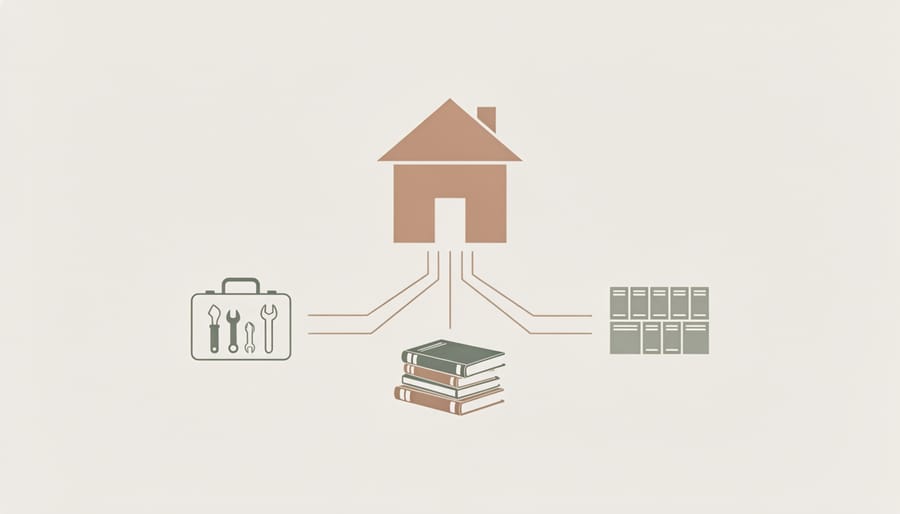
The theoretical foundations of wind energy can be learned independently through textbooks, online videos, and open educational resources, but this approach has significant limitations when preparing for a professional technician role. While self-study resources can build background knowledge in aerodynamics, electrical theory, and turbine components at minimal cost, they cannot replace the hands-on training and safety certifications that employers require.
Structured programs exist because wind turbine work involves high-voltage electrical systems, working at heights exceeding 80 metres, and equipment that can cause serious injury if mishandled. No amount of reading prepares you to troubleshoot a nacelle electrical fault 90 metres up or perform lockout-tagout procedures on live systems. Insurance providers and site operators demand documented training and certification before allowing anyone onto a turbine, making self-taught credentials essentially worthless for employment purposes.
Pros
- Self-study costs virtually nothing beyond books and internet access, preserving your budget for essential certifications.
- You can learn theoretical concepts at your own pace without travel or schedule constraints.
- Background knowledge gained through independent study helps you grasp formal training content more quickly.
Cons
- Employers universally require recognized certifications that self-study cannot provide.
- Critical safety training and hands-on electrical work cannot be learned from books or videos alone.
- You risk developing knowledge gaps or incorrect techniques that structured programs would catch and correct.
- Without guided practice on actual equipment, theoretical knowledge does not translate to field competence.
The most cost-effective approach blends both methods strategically. Use self-study to build foundational knowledge before enrolling in structured training, which lets you focus tuition dollars on the irreplaceable components: simulator time, hands-on electrical work, climbing practice, and safety certifications. Reading wind energy textbooks, watching turbine manufacturer videos, and studying electrical diagrams beforehand means you will grasp formal instruction faster and get more value from expensive lab hours.
Self-study works well for understanding turbine types, power curves, grid integration concepts, and industry terminology. It fails completely for acquiring arc flash training, rescue procedures, high-voltage switching protocols, and the muscle memory needed to work confidently at height. Structured programs also provide the GWO (Global Wind Organisation) certifications that European wind farms require, which no self-study path can deliver.
If budget constraints are severe, start with the pay-as-you-learn option at $580 to access professional materials and Module 1 certification, supplementing with free resources between modules. This approach lets you avoid learning gaps while spreading costs over time. But recognize that eventually you must complete hands-on training and safety certifications to become employable. The question is not whether to invest in structured training, but when and at what intensity level suits your timeline and career goals.
Maximizing Your Training Investment
Choosing the right program level starts with honest assessment of your career timeline and budget reality. If you are transitioning careers and need employment within a year, a comprehensive eight-month academy program justifies its higher cost through deeper preparation and stronger employer recognition. Career-changers with stable income who can afford the $12,600 investment typically benefit from this intensity. If you are currently employed in adjacent fields or exploring whether wind energy suits you, the $1,750 certificate option provides sufficient foundation without major financial commitment. The $580 pay-as-you-learn entry point works particularly well for testing your interest before committing to the full program cost.
Evaluate program quality by examining factors that price alone does not reveal. Research which turbine manufacturers and energy companies partner with the training provider, industry collaboration signals curriculum relevance and often translates to hiring pipelines. Request specific job placement data, not vague success claims: what percentage of graduates secured technician positions within six months, and at what salary levels? Instructor backgrounds matter significantly in technical training. Programs led by former field technicians with years of turbine maintenance experience deliver practical insights that purely academic instructors cannot match. Verify whether programs provide access to current industry equipment and simulation software, as hands-on familiarity reduces your learning curve during actual employment.
Timing enrollment strategically can reduce costs and improve outcomes. Many European countries run renewable energy workforce development initiatives that subsidize training during specific enrollment periods. Research your national employment agency and regional economic development offices for wind sector programs, these schemes are particularly active in markets with offshore wind expansion plans. Larger energy companies sometimes sponsor technician training for prospective employees; approach hiring departments at wind farm operators directly about training partnerships rather than assuming none exist.
To choose training wisely verify what the tuition actually includes beyond course access. Compare whether exam fees, certification processing, learning materials, and software licenses are bundled or charged separately. The most expensive program is not always the best investment, a mid-tier option with strong industry connections often outperforms premium programs with limited employer relationships. Understanding broader wind energy technician pathways helps you position your training choice within a realistic career trajectory rather than treating it as an isolated decision.
Frequently Asked Questions
The most common questions about wind turbine technician training costs reflect practical concerns: fitting the investment into a budget, understanding time commitments, and assessing whether the credential will deliver career returns. Here are answers based on verified 2026 program data and industry realities.
Are payment plans available for wind turbine technician training?
Many programs offer flexible payment structures. For example, online certificate programs allow pay-as-you-learn enrollment starting at $580, which includes initial learning materials and the first module exam, rather than requiring the full $1,750 upfront. Larger academy programs may have different payment terms worth investigating directly with the provider.
How long does wind turbine technician training take?
Program length varies significantly by format and intensity. Accelerated programs compress training into three-week intensive sessions, while comprehensive academy programs typically run eight months to cover servicing, diagnosing, repairing, and installing wind turbines thoroughly. Your career timeline and learning preferences should guide which duration suits you.
Do I need prior electrical experience to enroll?
Requirements vary by program level. Entry-level certificate programs often accept students without formal electrical backgrounds, providing foundational instruction as part of the curriculum. More advanced programs may expect basic technical aptitude or hands-on experience, so check specific prerequisites before applying.
What certifications will I earn from these programs?
Most structured programs award completion certificates recognized by wind industry employers. Comprehensive academy programs prepare you for servicing, diagnosing, repairing, and installing wind turbines, with credentials tied to specific competency standards. Verify that any program you consider aligns with employer requirements in your target job market.
Can I work internationally with wind turbine technician training?
Wind energy is a global industry, and technical skills transfer across borders. However, specific certifications, safety standards, and regulatory requirements differ by country, particularly between European markets and other regions. Research the credential recognition and additional licensing needed in your target work location.
Is wind turbine technician training worth the investment?
The expanding European wind energy sector creates strong demand for qualified technicians, and specialized skills in renewable energy typically command competitive wages. Training costs ranging from $1,500 for online certificates to $12,600 for comprehensive programs represent a significant but recoverable investment when weighed against long-term earning potential in a growth industry.
Beyond these core questions, many prospective students wonder about the decision framework itself. Choosing the right training level involves matching program intensity to your career goals, budget constraints, and learning style. A training buying guide approach helps you evaluate program quality beyond price alone, considering factors like industry partnerships, instructor credentials, and hands-on component quality.
Funding remains a common concern. While specific employer sponsorships and government training schemes vary by country and change frequently, it’s worth researching renewable energy workforce development initiatives in your region, particularly in European markets where energy transition policies often include technician training support. Contact programs directly about institutional financing options, and investigate whether your current employer or target companies offer tuition assistance for skills development aligned with their operational needs.
Wind turbine technician training in 2026 offers entry points for nearly every budget and career stage. Online certificate programs start around $1,500 to $2,000, providing foundational knowledge without major financial commitment. At the other end, comprehensive eight-month academy programs reaching $12,600 deliver intensive hands-on preparation for immediate professional deployment. Neither option is inherently better, the right choice hinges on where you are in your career journey, how you learn best, and what role you’re targeting.
If you’re exploring the field or transitioning from another sector, entry-level programs offer a manageable risk. Those ready to commit fully to the profession often find the investment in comprehensive training pays dividends through faster job placement and higher starting positions. The key is matching program intensity to your goals, not simply choosing the cheapest or most expensive option.
Europe’s wind energy sector continues expanding rapidly, creating sustained demand for qualified technicians who understand why wind energy matters and can maintain the infrastructure making it viable. That makes 2026 a strategic time to invest in training. Before enrolling, verify exactly what each program includes, check instructor credentials, and confirm certification recognition in your target market. The investment matters, but choosing training aligned with your professional objectives matters more.