Barbara
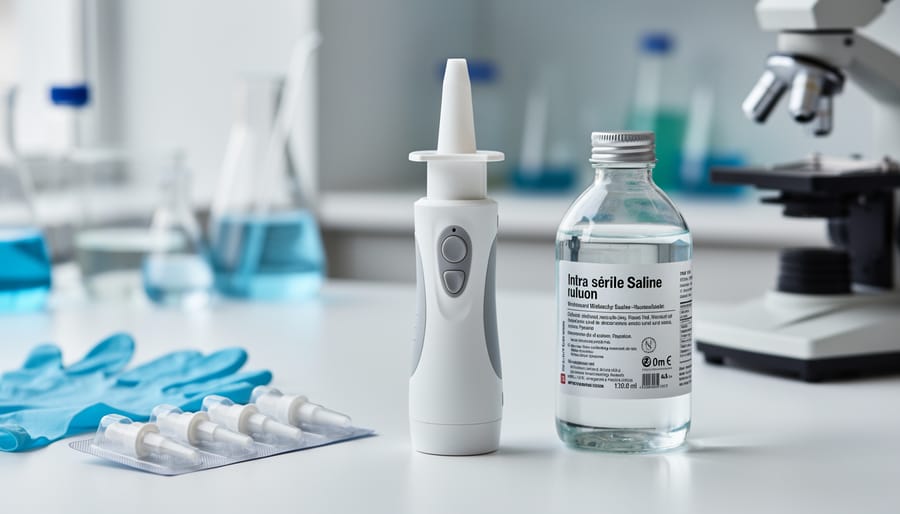
Selank is a synthetic heptapeptide, a chain of seven amino acids, derived from tuftsin, a fragment of the immunoglobulin G molecule that the body produces naturally. A selank nasal spray delivers the peptide through the nasal mucosa, a route chosen in research settings because it avoids digestive breakdown. It was developed in Russia, where it has been studied for its effects on anxiety, stress response, and immune signalling. Within the European Union, it is not an authorised medicine, so its status here is that of a research compound, not an approved treatment.
Why does this matter for anyone trying to understand the topic? Because Selank attracts bold claims, and the published evidence is far more modest than most of them suggest. The proposed mechanisms, including modulation of GABAergic activity and effects on enkephalin metabolism and cytokine expression, rest largely on animal studies and small human trials, many of them from a narrow set of research groups.
This overview defines the compound in plain terms, explains how it is believed to work, and sorts the documented research from the speculation. Along the way, it shows a transferable skill: reading a peptide study critically, with attention to sample size, study design, and independent replication.
What Selank Nasal Spray Means in Plain Language
Where Selank Comes From: Origins and Development
Selank was developed in Russia in the late twentieth century, at institutions linked to the Russian Academy of Medical Sciences. Researchers were looking at tuftsin, a small peptide with immune-related activity, and wanted a version that would last longer in the body. The result is a synthetic analogue of tuftsin built to resist the rapid breakdown that limits natural peptides. If you want to understand core concepts before tackling a new subject, a short glossary is a good place to start.
- Peptide
- A short chain of amino acids, smaller than a full protein.
- Tuftsin
- A naturally occurring peptide associated with immune signalling, from which Selank was derived.
- Intranasal delivery
- Administration through the nose rather than by mouth or injection.
- Anxiolytic
- A term for substances that reduce anxiety.
- Neuromodulation
- Changes in how nerve cells signal to one another.
- Preclinical vs. clinical research
- Preclinical work uses laboratory or animal models; clinical research involves human participants.
Interest grew because early studies suggested effects on mood and stress responses. Much of that work remains preclinical or small in scale.
Regulatory Status in Europe and Why It Matters
Selank is not authorised as a medicinal product by the European Medicines Agency (EMA) or by national authorities across the EU. In practical terms, that means it has not gone through the formal review of quality, safety and efficacy that medicines must pass before reaching patients. Products sold online under this name may vary widely in purity, dosage and labelling, and nobody has verified them to a pharmaceutical standard.
For researchers, the compound’s status shapes what is permissible and how work must be documented. For consumers, it means published findings cannot be treated as an endorsement for personal use. A qualified healthcare professional can put any interest in a compound into the context of your own health and legal situation.
To check the status of any compound, start with the EMA’s public medicines database and your national medicines agency’s register. If a substance does not appear there, it is not an authorised medicine. This simple habit works for any product making health claims.
How Selank Is Thought to Work: What the Research Suggests

Why Delivery Method Matters: The Nasal Route
Peptides are chains of amino acids, and that makes them fragile. Taken orally, they face stomach acid and digestive enzymes that tend to break them down before they reach the bloodstream. Injection avoids that problem, but it requires needles, sterile handling and, usually, someone trained to administer it.
Intranasal delivery sits between the two. The nasal lining is thin and richly supplied with blood vessels, so some compounds can be absorbed there without passing through the gut. Researchers are also interested in the so-called nose-to-brain pathway, where molecules might reach the central nervous system along nerves connecting the nasal cavity and the brain. How much of this applies to Selank is still being investigated.
Peptides also degrade quickly in solution, so formulation, storage and consistent dosing remain real challenges.
What Researchers Have Studied: Applications and Evidence Quality
Reading the Evidence: A Practical Checklist for Evaluating Health Research
Anyone who has compared solar module datasheets knows that a headline efficiency figure means little until you check how it was measured. Health research deserves the same scrutiny, and it helps to how to read research methodically rather than trusting a summary or a sales page.
Start with these questions whenever you meet a study or a product claim:
- Who ran and funded the study, and could they gain from a positive result?
- How many participants were involved, and were they humans or animals?
- Was there a control or placebo group, and were participants blinded?
- Has an independent team replicated the findings?
- Was the study peer-reviewed, and is it published in a reputable journal?
- Does the claim match what the study measured, or has it been stretched?
No single answer settles the matter. Together, though, they show how much weight a claim can bear. A small, unblinded, single-site study is a starting point for further research, not proof. Building this habit is one practical way to master evidence-based learning and it serves you equally well when judging a turbine’s rated output or a peptide’s reported effects.

Common Questions About Selank Nasal Spray
Is Selank approved in Europe?
No. Selank is not authorised as a medicinal product by the European Medicines Agency, and its legal status varies between countries.
Is it the same as a prescription anxiety medication?
No. It is an experimental peptide, not a conventional anxiolytic, and its effects have not been established in large, independent trials.
What side effects have studies reported?
Published studies are mostly small, so the safety picture is incomplete. Reported observations are limited, and long-term effects remain unknown.
Where can reliable information be found?
Start with the European Medicines Agency, your national regulator and peer-reviewed databases such as PubMed, and discuss any questions with a qualified healthcare professional.
Treat early-stage findings with caution, and weigh any claim the way you would a performance figure for a new technology: check the source, the sample size and whether results were independently replicated. Applying this kind of balanced decision-making helps you separate documented evidence from marketing language.
Selank nasal spray is a synthetic peptide derived from tuftsin, studied in laboratory and limited clinical settings and delivered intranasally in research contexts. The proposed mechanisms, including effects on neurotransmitter pathways, BDNF expression and immune signalling, remain hypotheses rather than settled science. Much of the evidence is preclinical or comes from small, regionally concentrated studies, and Selank is not an authorised medicine in the EU. That is a wide gap between promising early findings and established treatment, and it is worth keeping in view.
The habits that help you judge a solar module datasheet or a turbine performance claim apply here too: check the source, the sample size, the controls and whether anyone independent has replicated the result. If you have health questions, speak with a qualified healthcare professional and consult official sources such as the European Medicines Agency. Transparent, rigorous science takes time, but it is steadily building a clearer picture, and informed readers are well placed to follow it.