Barbara
Master photovoltaic fundamentals through accredited Solar Energy Systems Education programs that combine theoretical knowledge with hands-on installation practice, ensuring you understand both electrical principles and mechanical mounting systems. Prioritize courses offering real-world project simulations where you’ll calculate system sizing, assess shading impacts, and design installations for various roof types—skills that separate competent professionals from those with purely academic knowledge.
Focus your learning on three interconnected competency areas: technical system design including inverter selection and battery storage integration, financial modeling covering European subsidy frameworks and levelized cost calculations, and regulatory compliance encompassing grid connection requirements and safety standards. Each area demands practical application rather than memorization, as solar projects fail most often at the implementation stage where theoretical knowledge meets physical constraints.
Evaluate educational programs by their industry connections and practical outcomes rather than duration or certification names. Quality training includes site assessment exercises, equipment selection workshops with multiple manufacturer products, and exposure to common installation challenges like structural limitations or grid connection delays. European learners benefit from programs addressing region-specific considerations including varying feed-in tariff structures, differing building codes across member states, and climate-appropriate system configurations from Mediterranean to Nordic conditions.
Supplement formal education with manufacturer training sessions, industry conferences, and mentorship from experienced installers who understand the gap between classroom learning and rooftop reality. The solar sector rewards professionals who combine technical competency with practical problem-solving skills, making hands-on experience essential regardless of your entry point—whether you’re a recent graduate, transitioning professional, or organization building internal capabilities. This comprehensive approach transforms solar knowledge from abstract concepts into deployable expertise that advances both career prospects and Europe’s renewable energy transition.
The Current Gap in Solar Energy Education

Academic Theory vs. Practical Application
Understanding solar energy theory provides essential foundations, but classroom learning alone rarely prepares professionals for the complexities of real-world implementations. While academic courses excel at teaching photovoltaic principles, electrical fundamentals, and system calculations, they often fall short in addressing the practical challenges that emerge during actual installations.
The gap between theory and practice becomes evident when professionals encounter site-specific complications: uneven roof structures, shading analysis requiring on-site judgment, or inverter placement decisions that textbooks cannot adequately simulate. Theoretical knowledge might explain maximum power point tracking, but only hands-on experience teaches you how weather conditions affect system performance throughout different European climate zones, or how to troubleshoot unexpected voltage drops in real installations.
European solar markets particularly highlight this divide. Regulatory frameworks, grid connection requirements, and safety standards vary significantly across member states, creating practical considerations that purely academic programs rarely address comprehensively. A graduate might understand solar irradiance calculations perfectly yet struggle with navigating local permitting processes or coordinating with distribution system operators.
Effective solar education therefore requires a balanced approach combining theoretical understanding with practical exposure. Site visits, installation workshops, and case studies of completed European projects bridge this gap, transforming abstract concepts into applicable skills. Professionals who gain experience with actual equipment, real installation challenges, and operational systems develop the problem-solving capabilities that employers value most. This practical dimension transforms solar knowledge from academic understanding into professional competency, enabling learners to confidently design, install, and maintain systems that perform reliably in real-world conditions.
What Project Developers Actually Need to Know
Project developers need competencies that span technical, regulatory, and commercial domains to successfully deliver solar installations. Understanding photovoltaic technology fundamentals remains essential, including how different cell types (monocrystalline, polycrystalline, thin-film) perform under various conditions and how temperature, shading, and soiling affect system output. However, technology knowledge alone proves insufficient without practical system design skills.
Professionals must master solar resource assessment using tools like PVGIS or specialized software to accurately predict energy yields across European climatic zones. System sizing requires balancing energy demand patterns with available roof space or land, inverter selection, and optimal array configuration. Increasingly important is battery storage integration, particularly as European markets shift toward self-consumption models and grid services.
Grid connection procedures vary significantly across European countries, making regulatory literacy crucial. Project developers need familiarity with feed-in tariffs, net metering schemes, and power purchase agreements relevant to their operating regions. Understanding permitting processes, building regulations, and environmental impact requirements prevents costly project delays.
Financial modeling capabilities distinguish successful developers from those who struggle. This includes lifecycle cost analysis, return on investment calculations, and navigating subsidy mechanisms available through national schemes and EU programs. Knowledge of project finance structures, from direct purchase to third-party ownership models, enables developers to present viable proposals to diverse clients.
Finally, grid integration challenges require understanding voltage regulation, frequency stability, and how distributed generation affects local network infrastructure. As solar penetration increases across European grids, addressing curtailment issues and implementing smart inverter functions becomes standard practice rather than exceptional circumstance.
Core Components of Effective Solar Energy Education
Photovoltaic Technology Fundamentals
Understanding photovoltaic technology fundamentals forms the cornerstone of comprehensive solar energy education. At its core, photovoltaic systems convert sunlight directly into electricity through semiconductor materials, primarily silicon-based cells that dominate today’s market with approximately 95% share.
Solar cells come in three main categories: monocrystalline, polycrystalline, and thin-film technologies. Monocrystalline cells offer the highest efficiency rates, typically ranging from 20-22% in commercial applications, while polycrystalline variants deliver 15-17% efficiency at lower manufacturing costs. Thin-film technologies, though less efficient at 10-13%, provide flexibility and perform better in low-light conditions, making them valuable for specific European applications where diffuse light predominates.
Module efficiency represents the percentage of sunlight converted to usable electricity, a critical metric for system design and economic viability. Modern European installations increasingly feature high-efficiency modules that maximize energy yield within limited roof spaces, particularly important in densely populated urban environments.
Understanding degradation rates proves essential for accurate long-term performance projections. Quality modules typically degrade at 0.5-0.7% annually, meaning a system retains roughly 80-85% of its original capacity after 25 years. This knowledge directly impacts financial modeling and warranty evaluations.
Recent technological developments include bifacial modules capturing reflected light, half-cut cell technology reducing resistive losses, and PERC (Passivated Emitter and Rear Cell) designs enhancing light absorption. European manufacturers lead several innovations, particularly in tandem cell research combining different semiconductor materials to exceed traditional efficiency limitations.

System Design and Integration
Mastering system design and integration represents a crucial competency for anyone serious about solar energy implementation. This discipline combines technical knowledge with practical problem-solving to create reliable, efficient systems tailored to specific contexts.
Inverter selection forms the backbone of system design decisions. Understanding the differences between string inverters, microinverters, and hybrid systems allows you to match technology to project requirements. In European markets, considerations extend beyond technical specifications to include grid compatibility standards, such as VDE-AR-N 4105 in Germany or G99 in the UK. Each inverter type presents distinct advantages: string inverters offer cost-effectiveness for uniform installations, while microinverters excel in partially shaded conditions common in urban European environments.
Energy storage integration has become increasingly central to system design principles, particularly as grid parity and time-of-use tariffs reshape European electricity markets. Learning to size battery systems requires understanding load profiles, consumption patterns, and client expectations regarding backup power versus self-consumption optimization. Modern lithium-ion technologies dominate residential applications, but designers must also evaluate alternatives like flow batteries for larger installations.
Monitoring systems provide the critical feedback loop that ensures long-term system performance. Contemporary platforms offer granular production data, predictive maintenance alerts, and performance benchmarking tools. For professionals, learning to interpret monitoring data transforms reactive troubleshooting into proactive optimization.
Effective system design ultimately requires synthesizing multiple variables—site conditions, shading analysis, regulatory frameworks, client budgets, and performance expectations—into cohesive solutions. Practical training that emphasizes real-world case studies and design software proficiency proves invaluable for developing this integrative thinking.
Regulatory Framework and Market Dynamics
Understanding the regulatory landscape is fundamental to successful solar energy deployment in Europe. Feed-in tariffs (FiTs), which guarantee fixed payment rates for solar electricity fed into the grid, have been instrumental in driving solar adoption across European markets. While many countries are transitioning toward alternative incentive mechanisms like net metering or competitive auctions, comprehending the evolution and current structure of these financial instruments remains essential for project developers and system integrators.
Grid connection requirements vary significantly across European jurisdictions, affecting project timelines and costs. Learning solar energy necessitates familiarity with technical specifications for grid integration, including voltage requirements, power quality standards, and safety disconnection protocols. These regulations ensure system reliability while protecting grid infrastructure and personnel.
Permitting processes represent another critical knowledge area, as administrative procedures can substantially impact project feasibility. From initial planning applications to building permits and grid connection approvals, understanding the bureaucratic pathway in different European countries helps professionals anticipate delays and budget accordingly. Some nations have streamlined procedures for residential installations, while commercial and utility-scale projects typically require comprehensive environmental assessments and stakeholder consultations.
Market incentive structures continue evolving as solar technology costs decline and policy objectives shift toward grid flexibility and energy storage integration. Contemporary professionals must monitor developments in renewable energy certificates, capacity markets, and self-consumption regulations. This regulatory awareness enables informed decision-making about system design, business models, and investment strategies, ultimately translating technical knowledge into commercially viable solar solutions that align with Europe’s energy transition goals.
Building Practical Skills Through Hands-On Training
Installation Workshops and Site Assessments
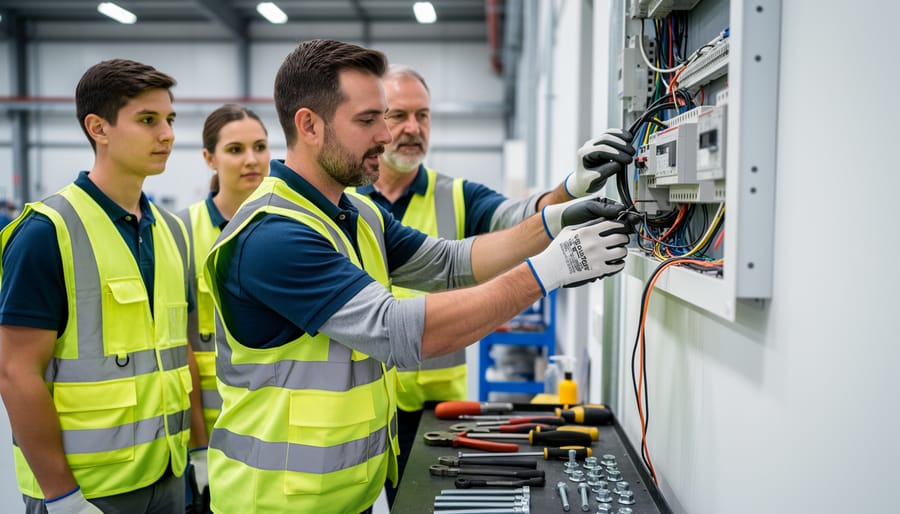
Hands-on installation workshops represent a crucial bridge between theoretical knowledge and real-world competency in solar energy deployment. These practical sessions, increasingly prevalent across European training centres and technical colleges, provide participants with direct experience in mounting photovoltaic systems, establishing electrical connections, and understanding the physical realities of solar installations.
Quality workshops typically cover multiple mounting approaches, from roof-integrated systems common in German residential installations to ground-mounted arrays prevalent in Mediterranean solar farms. Participants learn to assess structural integrity, calculate load-bearing requirements, and implement installation best practices that ensure system longevity and safety compliance. This practical exposure reveals challenges that classroom theory cannot adequately convey, such as managing cable routing in confined spaces or adapting to unexpected roof configurations.
Site assessment training develops critical evaluation skills necessary for project success. Professionals learn to conduct shadow analysis using specialized tools, measure roof angles and orientations, and identify potential obstacles like chimneys or ventilation systems. These assessments directly influence system design decisions and generation forecasts, making them essential for accurate project proposals.
Electrical connection workshops address DC and AC wiring, inverter integration, and grid connection procedures aligned with European standards. Participants gain confidence working with components under supervised conditions, understanding safety protocols, and troubleshooting common installation issues. Many programmes incorporate real building sites or dedicated training facilities that simulate authentic installation environments, allowing learners to develop muscle memory and problem-solving abilities that translate immediately to professional practice.
Troubleshooting and Performance Optimization
Effective troubleshooting and performance optimization represent essential competencies for solar energy professionals, bridging theoretical knowledge with practical problem-solving. Modern photovoltaic systems incorporate sophisticated monitoring capabilities, yet interpreting data correctly and implementing appropriate corrective measures requires systematic diagnostic skills.
Performance monitoring begins with establishing baseline expectations using industry-standard tools like PVsyst or HelioScope, which calculate theoretical energy yields based on location, system configuration, and historical weather data. Comparing actual production against these projections reveals underperformance, typically defined as deviations exceeding 5-10% over extended periods. European markets increasingly require comprehensive monitoring as part of warranty compliance and subsidy conditions.
Common system issues fall into several categories. Soiling losses, particularly relevant in agricultural or industrial areas, can reduce output by 2-8% annually in Central European climates. Regular cleaning schedules and anti-soiling coatings provide mitigation strategies. Shading analysis, often overlooked during initial design, becomes critical when vegetation grows or adjacent construction occurs. Module degradation typically proceeds at 0.5-0.8% annually for quality panels, though accelerated degradation sometimes indicates manufacturing defects or installation errors.
Inverter performance deserves particular attention, as these components represent the most frequent failure points. String-level monitoring helps isolate problems, revealing issues like DC arc faults, insulation breakdowns, or grid compatibility challenges. European grid codes require specific reactive power capabilities and frequency response characteristics that demand proper inverter configuration.
Temperature coefficients significantly affect performance, with crystalline silicon modules losing approximately 0.4% efficiency per degree Celsius above 25°C. Adequate rear ventilation and appropriate mounting systems help manage thermal effects. Advanced optimization strategies include module-level power electronics for complex roof geometries, tracker systems for ground-mount installations, and bifacial modules that capture reflected light. Performance ratio calculations provide standardized metrics for comparing systems, with well-designed European installations typically achieving 75-85% performance ratios.
Learning Pathways for Different Professional Roles
Entry-Level: Building Your Foundation
Starting your solar energy education requires a structured approach to build solid foundational knowledge. Begin with understanding basic photovoltaic principles, including how solar cells convert sunlight into electricity and the semiconductor physics behind this process. This theoretical foundation should be complemented immediately with practical exposure to system components like inverters, mounting structures, and battery storage solutions.
Focus initially on three core knowledge areas. First, grasp electrical fundamentals specific to direct current systems and power calculations. Second, familiarize yourself with solar radiation data and how geographic location affects energy yield across European climates. Third, learn system sizing methodologies to match energy generation with consumption patterns.
Essential entry-level courses should cover solar resource assessment, basic system design, and an introduction to European regulations and standards, particularly EN and IEC certifications that govern installation quality. Seek programs offering hands-on workshops where you can practice wiring, commissioning, and troubleshooting small-scale installations.
Prioritize learning resources that use real European case studies, as they contextualize theory within familiar regulatory frameworks and climate conditions. Online platforms combined with practical training sessions typically provide the most accessible pathway for beginners, allowing you to progress at your own pace while building tangible skills that transition directly into professional competency.
System Integrators and Technical Professionals
For system integrators and technical professionals, learning solar energy requires mastery of complex design software, electrical engineering principles, and European grid integration standards. Your training should cover advanced photovoltaic system design using industry-standard tools like PVsyst or HelioScope, including shading analysis, inverter selection, and energy yield calculations. Understanding European grid codes, such as VDE-AR-N 4105 in Germany or G99 in the UK, is essential for successful installations that meet regulatory requirements.
Focus on practical skills including site assessment methodologies, DC and AC electrical design, battery storage integration, and commissioning procedures. Many European technical colleges and manufacturers offer specialized courses combining theoretical knowledge with hands-on installation practice. Look for training that addresses real-world challenges like retrofitting existing buildings, optimizing system performance in varying climatic conditions across Europe, and troubleshooting common technical issues.
Professional certification programs, such as those from TÜV or national electrical associations, demonstrate competency to clients and employers. Consider mentorship opportunities or apprenticeships with established solar companies to bridge the gap between classroom learning and field experience. This practical exposure proves invaluable when translating technical specifications into functioning installations that meet client expectations and regulatory standards.
Project Developers and Business Professionals
For those steering solar projects from conception to completion, learning extends beyond technical specifications into the commercial and organizational dimensions that determine project success. Understanding financial modeling becomes essential—you’ll need to master tools for calculating levelized cost of energy (LCOE), internal rate of return (IRR), and navigate European funding mechanisms including grants, feed-in tariffs, and power purchase agreements (PPAs). Project management skills specific to solar installations are equally critical: coordinating between engineering teams, procurement specialists, grid operators, and regulatory bodies while managing timelines and budgets.
Successful project developers must also develop competency in stakeholder engagement, particularly understanding the concerns of local communities, investors, and utility companies. Market analysis capabilities help you identify opportunities across Europe’s diverse regulatory landscapes, from Germany’s auction systems to Spain’s renewable energy zones. Risk assessment skills—evaluating everything from equipment warranties to grid connection delays—separate viable projects from problematic ones. Practical learning should include case studies of actual European installations, exposing you to real challenges like permitting complexities and interconnection negotiations that textbooks often overlook.
The European Context: Why Location Matters in Solar Education
Regional Solar Potential and Climate Considerations
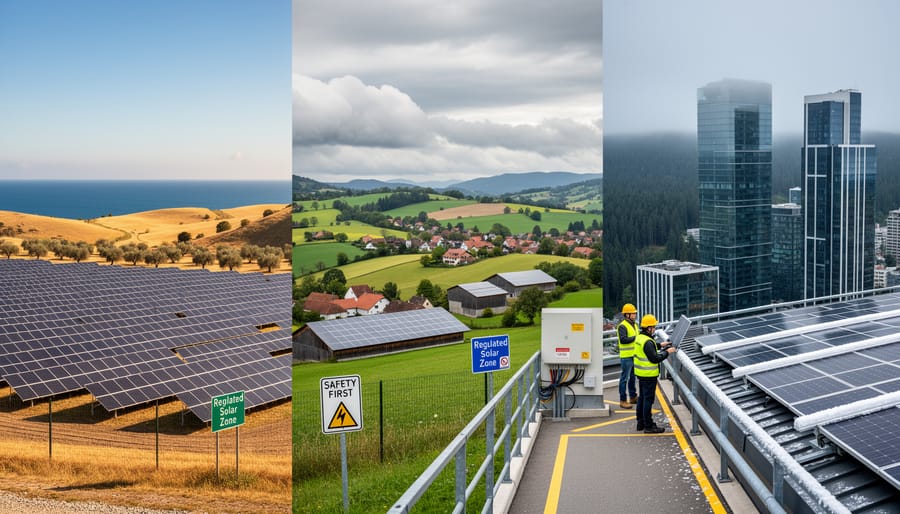
Europe’s diverse climate zones significantly impact solar system performance and the technical knowledge needed for effective installations. Northern regions like Scandinavia receive approximately 900-1,100 kWh per square meter annually, compared to 1,800-2,000 kWh in Southern Europe. This variation demands different approaches to system design, component selection, and performance modeling.
In Nordic countries, learning solar energy requires understanding low-angle irradiation optimization, snow load calculations, and bifacial module advantages that capture reflected light from snow-covered surfaces. These systems often integrate with heat pump technology and require expertise in maximizing energy capture during limited daylight hours.
Central European climates present moderate irradiation levels (1,200-1,400 kWh per square meter) with variable weather patterns. Professionals must master accurate energy yield forecasting that accounts for cloud cover, seasonal variation, and temperature coefficients affecting panel efficiency.
Mediterranean regions benefit from high solar potential but face challenges including elevated operating temperatures that reduce panel efficiency by 10-15 percent and dust accumulation requiring specialized maintenance protocols. Understanding cooling strategies, optimal tilt angles for year-round production, and degradation rates in high-temperature environments becomes essential.
Successful solar professionals recognize that climate-specific knowledge directly influences system performance, financial viability, and client satisfaction. Educational programs emphasizing regional considerations prepare practitioners for real-world implementation challenges across Europe’s varied geography.
Navigating European Energy Policies
Understanding European energy policies is essential for anyone developing solar projects across the continent. The EU’s Renewable Energy Directive sets binding targets requiring member states to achieve at least 42.5% renewable energy by 2030, with solar playing a pivotal role in this transition. These overarching directives create the framework, but implementation varies significantly across national borders.
Each European country operates distinct support schemes that directly impact project viability. Feed-in tariffs, net metering arrangements, and renewable energy certificates differ substantially between Germany, Spain, France, and other nations. Understanding these mechanisms helps you identify the most favorable markets and structure projects accordingly. For instance, Spain’s recent regulatory reforms have reopened substantial opportunities for utility-scale development, while Germany continues refining its auction systems for distributed solar.
Policy literacy translates directly into competitive advantage. Developers who comprehend subsidy timelines, grid connection requirements, and permitting procedures can navigate bureaucratic processes more efficiently, reducing project timelines and costs. Additionally, staying informed about policy evolution allows you to anticipate market shifts and position projects strategically. The European Green Deal continues reshaping regulatory landscapes, making ongoing policy education a practical necessity rather than optional background knowledge for solar professionals.
Choosing the Right Educational Program
Certification vs. Skills-Based Learning
Choosing between certification programs and skills-based learning depends on your career objectives and current position in the renewable energy sector. Formal certifications, such as those offered by European training bodies and professional associations, provide structured pathways and recognized credentials that enhance employability. These programs typically combine theoretical knowledge with standardized assessments, making them valuable for roles requiring regulatory compliance or formal qualifications. In European markets, certifications can be particularly important for system integrators and installers who need to meet national standards.
Skills-based learning, by contrast, emphasizes hands-on competency development through practical workshops, apprenticeships, and project-based training. This approach allows you to immediately apply knowledge to real-world scenarios, making it ideal for professionals already working in the field who need specific technical capabilities rather than formal credentials. Many European renewable energy companies now value demonstrable skills alongside traditional qualifications.
The most effective approach often combines both pathways. Starting with foundational certifications establishes credibility and theoretical understanding, while supplementing with targeted skills training ensures practical competency. Consider your immediate career needs: if you’re entering the industry, certifications open doors; if you’re advancing within it, skills-based training accelerates expertise. Some European institutions now offer hybrid programs that integrate certification with practical application, providing comprehensive preparation for solar energy careers.
Evaluating Course Quality and Industry Relevance
Selecting quality solar energy education requires careful evaluation across several dimensions. Begin by examining instructor credentials—look for professionals with active industry experience, not just academic qualifications. Instructors currently working on solar installations or project development bring invaluable real-world insights that textbook knowledge cannot replicate.
Curriculum currency matters significantly in a rapidly evolving sector. Programmes should reflect recent developments in photovoltaic technology, energy storage integration, and regulatory frameworks. Within the European context, content must address current EU directives, national feed-in tariff structures, and grid connection requirements that vary across member states.
The hands-on component distinguishes exceptional courses from mediocre ones. Practical modules should include system sizing calculations, equipment selection exercises, site assessments, and ideally, supervised installation work. Many European institutions partner with solar companies to provide apprenticeship opportunities or simulation environments using actual industry software for performance modelling and financial analysis.
Industry connections represent another vital criterion. Programmes maintaining relationships with manufacturers, installation companies, and project developers often facilitate job placements and internships. Check whether courses offer networking events, guest lectures from industry leaders, or certification pathways recognised by professional bodies like the European Solar Thermal Industry Federation.
Finally, seek verifiable outcomes—employment rates, graduate testimonials, and professional recognition received by programme alumni demonstrate genuine value beyond marketing claims.
Mastering solar energy requires more than memorizing photovoltaic principles or understanding inverter specifications. The most successful professionals in Europe’s renewable energy sector combine technical knowledge with practical implementation skills and market awareness. This comprehensive approach to learning prepares you for the complex realities of deploying solar systems, from residential installations to utility-scale projects.
Throughout your educational journey, prioritize programs that integrate theoretical foundations with hands-on experience. Understanding module efficiency ratings matters little if you cannot assess roof structural integrity or navigate local permitting requirements. Similarly, mastering electrical design principles becomes truly valuable when paired with knowledge of financing mechanisms, grid connection procedures, and regulatory frameworks specific to European markets.
The solar industry’s trajectory across Europe presents unprecedented opportunities for well-prepared professionals. As member states accelerate their energy transition commitments, demand continues growing for system integrators, project developers, energy consultants, and technical specialists who can bridge the gap between solar technology and practical deployment. The European Green Deal and national renewable energy targets create a favorable environment for career advancement in this sector.
Your investment in comprehensive solar education positions you at the forefront of Europe’s energy transformation. Whether you aim to design residential systems, manage commercial installations, develop solar parks, or advise organizations on energy transition strategies, the foundation you build through quality training will serve you throughout your career. The combination of technical competency, practical skills, and market understanding distinguishes truly effective solar professionals from those with merely theoretical knowledge. As Europe’s solar capacity continues its remarkable expansion, your expertise will contribute meaningfully to a more sustainable energy future while opening doors to rewarding career opportunities.